We were a little slow to get up on our second day in Oslo. I think the constant travel was beginning to get to us. Nevertheless, we had things we planned to do this day so we needed to get up and get going. Two places topped our list. One was cultural/historical and one was art.
First we needed to get light rail tickets to the park we tried to get to yesterday. We found the ticket office outside the central train station and finally bought our tickets. Then we began to walk down to the waterfront as we were going to take a ferry to our first activity. On the way there we came across another church so we had to check it out.
The Oslo Cathedral is the main church of the Church of Norway in Oslo. It boasts unique painted ceilings. It was in the typical cross shape. High up on the ceiling the artist Hugo Mohr painted various scenes. They included paintings about Christ as well as other important Biblical characters such as Adam and Eve.
Another unusual feature was a large box seat up high in the front of the balcony. Box seats in churches are quite unusual. On the front of the box was the symbol of a crown so my thought is that this was a place for royalty when they came to church. At least two royal weddings took place here as well as King Harald V’s funeral on September 9, 2026.


Leaving the church we continued walking down to the waterfront near the Opera House. However, when we arrived, I could not find the ferry dock. Some internet checking revealed I was in the wrong location, and the ferry terminal was now a 20 minute walk away. I had made some wrong assumptions again. When we were at the church, we were actually closer!
So we walked back in the direction of the church passing through some areas with different styles of architecture. It’s always interesting to see the variety of buildings in cities where the old mixes with the new.


We finally reached the ferry terminal, arriving just in time to board and take off. The ferry was taking us to an area where we would get off and walk about ten minutes to the Norsk Folkemuseum. This is a large and interesting place to visit. Guests enter into a large plaza. The buildings around it have various exhibits inside. We went into one of them and saw exhibits about crafts and traditional clothing.


In the lower level of the museum we found a large area dedicated to religious artifacts. For some reason visitors were not allowed to walk in this area. There were viewing points up above to look down into the exhibits.


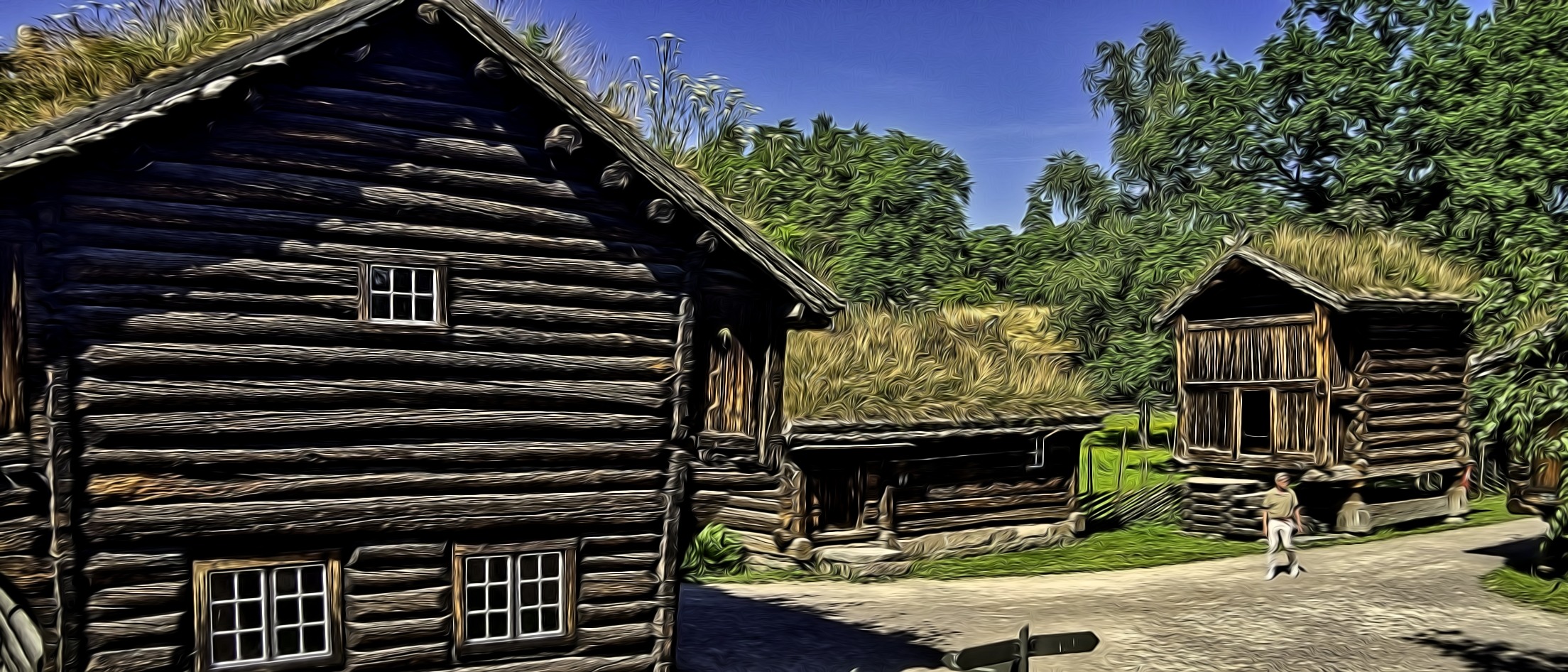
Behind the plaza is a number of re-creations of small villages. The buildings here are representative of the styles of the buildings in various locations around Norway. These were farming communities so all the buildings are set in farming type environments with real animals and gardens. Inside some of the houses are people showing some of the activities of the time such as creating wool yarn or weaving.
One of the things which fascinated me was the fences. Norwegians built them in a most unique fashion which I had never seen before. It was certainly creative.


We happened to come across a dancing performance. It started with the blowing of a long horn. Then they did three different dances. The last one was quite interesting. Normally two men performed the dance which seems to simulate a fight between them. After the performance I saw quite a few little boys trying to imitate moves they had seen in the dance.


Before we left we took a few minutes to go through an exhibit regarding the Sami people. We had some experience with their culture in the northern part of Norway on our cruise.


We took quite a while at the museum and missed the ferry boat by a few minutes when we got back to the dock so we waited for the next one. When we got back to the city center, we noticed that the Nobel Peace Center was nearby. We took photos, but we didn’t go in due to lack of time.


Nearby was City Hall which is a large red brick building. It has a number of interesting features on it. In front of it is a large square, but it was blocked off for the day. Our thinking was they were preparing for a large watch party for Norway’s big World Cup soccer game against England in a few days.
We were now ready to go to the park we had wanted to visit yesterday. We had our light rail tickets, but we needed to find a station nearby. When we found one, all the trains were going in the opposite direction of where we wanted to go. We figured there needed to be another entrance nearby for trains going in the opposite direction. I thought it might be on the other side of a street so we walked over there. In doing so we came across the Royal Palace. That was a lucky find, but not what we wanted.


We returned to the station area and discovered the entrance to the other station to the right of the first one. Finally we were on our way. We got off and began walking in the direction we thought we needed to go. Fortunately we were right, and we came to the entrance of Frogner Park and the Vigeland Sculpture Park. This is the largest park dedicated to the art of one artist. Gustav Vigeland created statues of people in all kinds of emotional states and relationships. The unique things is all the statues are nude. He created them nude in an attempt to keep the figures more universal, not dated by fashion styles.
The nudes are a bit startling, especially the males. Society has tended to allow seeing female nudes more than male nudes. What I liked was the fact that many of the males were show in positive interaction with children. They seemed to be playing together and having fun. That was a good perception to see of men.
There are three main statue areas. First is a bridge. On both sides of the bridge are various statues on the side walls. This is similar to the well known Charles Bridge in Prague. The difference is one artist did all the statues here.


The next section is a large fountain. Four men are holding up a huge cauldron from which water pours out. Around the pool are both statues with trees as well as small pictures of people around the perimeter of the base.


Up some stairs is the final large section. A tall monolith stands in the center covered with bodies all the way to the top. Around it are rows of three statues coming out from the center. These statues show people interacting in various ways..


Vigeland Statue Park is just one section of Frogner park The park is very large with lots of green space. Between the statue areas are gardens that include roses as well as other garden sections. A lot of people were there enjoying the park seated in the green spaces on blankets and enjoying the summer weather.


By this time we were anxious to get back. We had told Andrea and Jacob we would have dinner with them as we hadn’t seen them since we arrived in Oslo. However, we didn’t have any internet connection so we couldn’t inform them as to where we were. Fortunately when we got back, they had just arrived at a pizza restaurant nearby so we were able to join them for a final dinner together. Tomorrow we would be off to Riga, Latvia while they were going to Sweden to spend some time with a friend. We enjoyed our pizza and our time with Andrea and Jacob.
Back at our hotel we were ready to get some much needed sleep. Tomorrow we would be traveling again. Two more cities to visit before we head home.
Discover more from Battered Suitcase
Subscribe to get the latest posts sent to your email.
Booked a long Oslo weekend in March and I am trying to squeeze the folk museum and Vigeland into the same day. Is the open-air section at Norsk Folkemuseum worth the extra hour if the weather turns? Curious how many hours you actually spent at each before heading to the ferry.
One can easily do both in the same day depending on what you are planning. The ferry can delay you. It’s about 25 minutes I believe between each ferry. The folk museum has a lot to see. We didn’t see it all. We were there about two hours I would say. The outdoor area is mostly farming land and the various types of homes. If its raining, it probably won’t be the greatest experience. Of course Vigeland is also outdoors. Depending on how much you want to study the art work, one can walk through it in an hour and see everything. While there are a lot of statues, they are all in one line of walking. Thanks for stopping by. I hope I have helped you out.