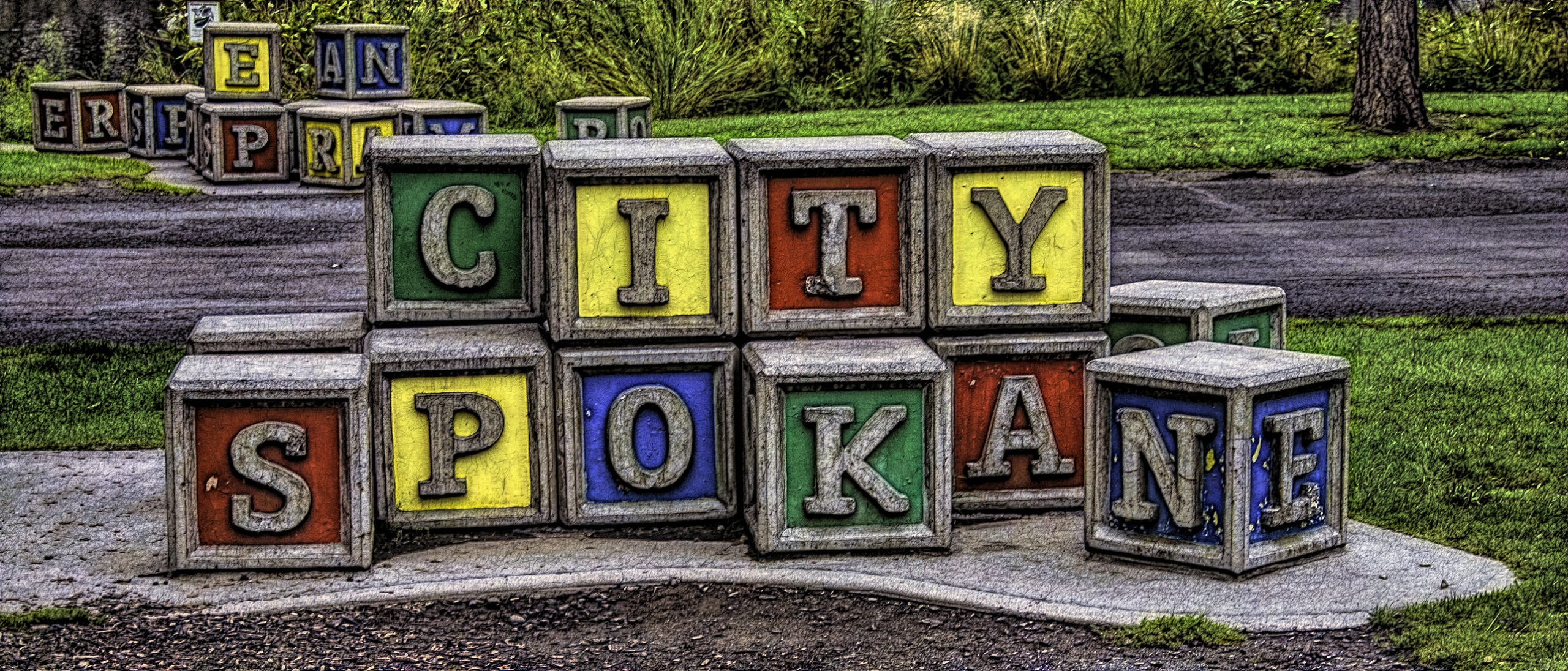
Spokane is one of the major cities in Washington state. In 1974 it hosted an Expo which changed its downtown area. We had never really explored this Washington city. It seemed the time had come to do so when we planned a road trip to visit Glacier National Park. Glacier was one of the few western national parks we had yet to visit. Since our road trip would pass right through Spokane, there was no excuse not to stop.
Our trip from our home to Spokane was pretty uneventful. The biggest challenge we faced were some rain storms. We drove through two rather intense but short lived downpours, but they didn’t set us back. We arrived in Spokane in the late afternoon and settled into our hotel.
The next day we set off to explore Spokane. Our hotel was within walking distance of the Spokane River so we headed in that direction. Our walk seemed to be in an older part of town with some run down buildings and quite a few brick structures.
When we reached the Spokane River, we decided to head to Gonzaga University along a trail that runs next to the river. I like to visit universities as I find they often have beautiful old buildings. The trail along the river was easy to follow, and soon we reached Gonzaga University. We entered the campus near the athletic buildings. Well known for its basketball program, the athletic facilities seemed appropriately nice.


We then wandered through what seemed the main part of the campus looking at the buildings and the well maintained gardens. There are a lot of trees around the campus, and the setting was quite lovely. Bing Crosby, an alumnus of Gonzaga, has a building named after him along with a statue of him in front of it. A few other statues were around the campus noting important figures including Ignatious Loyola who found the Jesuit monastic group, the founding organization of the university.


One building that stands out above the others in St Aloysius Church. While it sits next to the campus, it is separate from the university. With twin bell towers and a large stone brick body, it is a beautiful church. The interior boasts some colorful stained glass windows. There’s a simplicity in its design with the typical Catholic cross structure but with less ornamentation than many Catholic churches.


From the chapel we headed back toward the trail again walking by some other interesting buildings.


Back on the trail we walked toward the downtown area. The trail led us to a pedestrian bridge which crossed over to an island which was the main location of Expo ’74. There are a number of pedestrian bridges which cross over the Spokane River to the island. One of the big features on the island still standing is the bell tower. Apparently this tower is a remnant of a railroad station that used to be in the area.


Another significant location is the tent-like US pavilion from 1974. It is still in use for special events. The view from the island towards the main city shows Spokane’s Convention Center. with its angled roof. An art piece in the river itself also begs attention as it celebrated Spokane’s 100th anniversary.


Near the pavilion is an old blue metal bridge. It is here that one begins to notice the waterfalls. Above the bridge the water flows over rough stones, and in places shallow waterfalls have formed. This is only the beginning. We looked downstream and could see more waterfalls so we followed the trail down to the next pedestrian bridge.
From this bridge we could see that the waterfalls were a little deeper. Near the island there was a pretty deep trench that the water was rapidly flowing down. It was these waterfalls that were likely used to make electricity as right beside the falls is a building that indicates it was used to produce electricity.


This area was called the Upper Falls so it seemed that there must be lower falls, and as we looked downstream, it seemed to drop off. We crossed the pedestrian bridge over to the city side observing the rapid water flow on this side of the island. A little farther down we found stairs that led us downstream where we could see the lower falls which were the largest falls. Part of it was produced by a dam, but below the dam were also natural waterfalls. There seemed to be a fair amount of water flowing in September, but a staff member told us that in the winter the water level is 15 feet higher which is hard to imagine.
During the summer gondolas cross over the falls and provide a great view of the waterfalls. When we were there the gondolas had closed for the year but still hung in the sky.


After climbing back up the stairs, we walked over and found a Starbucks for some refreshment. We then began to walk back towards our hotel. We passed an art installation that was a large number of runners in a marathon type situation. It was quite interesting. Farther down we saw a goat garbage. When someone pushes a button a vacuum like suction near the metal goat’s mouth sucks up any garbage one might give it. Finally we passed a supersized Radio Flyer red wagon which had a slide in place of a handle.


As we were walking back toward our hotel I saw a number of interesting old brick buildings. Before we got to the hotel, I noticed an old stone church building on the other side of the freeway so I had to walk by it and take a photo. Then it was back to the hotel to rest and later have dinner with some friends. Tomorrow we drive on toward Glacier National Park.


Has anyone else visited the city of Spokane? What was your favorite part of the city? Any good tips on what to see or where to go? Your input is always welcome.
Discover more from Battered Suitcase
Subscribe to get the latest posts sent to your email.