This week I welcome Jacob Fuentes to my blog. He has traveled with us to Vietnam and Germany. Enjoy his thoughts on one of his favorite topics, street art.)
Street art has a way of staying with me long after I leave a place.
Not because it’s always the most famous or polished work in a city, but because it shows up where you least expect it. On the side of buildings, under bridges, in corners you would normally walk past. It interrupts a city without asking for permission, and if you slow down enough to notice it, it changes how you move through the space.
That habit of noticing things didn’t come from travel. It started earlier, just from learning to pay attention to the details in everyday life. Growing up, you pick up on how differently life can look depending on where you stand. You notice what’s said out loud and what isn’t.
That way of seeing things never really left me.
Over time it shaped how I move through the world. I’m drawn to secondhand things, objects with history, places that feel lived in rather than curated. I’d rather spend on experiences than things, on food I’ve never tried, on moments with people along the way. Somewhere in those experiences, I started to realize something simple: I don’t travel just to see places, I travel to experience how I notice them.
Mural hunting through a city does that for me. It pulls me out of the obvious routes and into side streets, underpasses, and neighborhoods I wouldn’t normally step into. It’s free, unplanned, and it feels like a way of getting closer to the character of a place without it being packaged for you.


Travel, at least in my experience, rarely looks like what you expect it to.
It’s long layovers that don’t quite justify a hotel. Crowded terminals, delayed trains, and time stretching in ways that feel out of your control.
I remember one night in particular. I was traveling with a friend, and we had been on the move for over a day. Our layover was awkward, too short to leave the airport, but too long to comfortably wait it out. So we ended up on the tile floor, pulling out a blanket, using our bags as makeshift walls, and watching movies on an iPad.
At the time it was exhausting and frustrating. Looking back, it’s one of those moments that stays with me because it was so ordinary. Not a highlight, just part of what travel actually is.
And it’s in those in-between spaces that I tend to notice things most clearly.
That’s where street art comes in.
It isn’t separate from a city. It’s part of it. It lives on walls people pass every day, but it doesn’t blend in. It interrupts. A mural can completely shift how a street feels. Sometimes it’s massive and impossible to ignore. Other times it’s small, quiet, almost hidden, but it always feels intentional.


And over time, I realized it’s not just the art itself that stays with me. It’s the artists behind it, and the stories you only find once you start looking a little closer.
On a recent trip to Germany, that became very clear.
Berlin is a city that feels layered in every direction. Nothing exists on its own. Old and new sit side by side, often on the same wall. One moment you’re moving through noise and motion, and the next you turn a corner and everything slows down. The city doesn’t reveal itself all at once. It comes in fragments.
And in those fragments, street art becomes part of how the city speaks.
One of the pieces that stayed with me most was Janus by PichiAvo (the Spanish artist duo Pichi, Juan Antonio García, and Avo, Álvaro Francisco). I had seen their work online before, but seeing it in person changed how I understood it.
Their work merges classical Greek and Roman imagery with raw graffiti language. Statues, gods, and mythological forms sit directly on top of spray paint, drips, color, and street texture. Nothing is separated or softened. It all exists at once.
Janus, named after the Roman god of beginnings and transitions, shows two faces looking in opposite directions. Standing in front of it, the idea of transition stops feeling abstract. It feels physical. Like the past and future existing in the same moment, pulling you in both directions at once.


In Kreuzberg, another piece carried a similar presence. Astronaut/Cosmonaut by Victor Ash. Painted in 2007, it has become one of Berlin’s most recognizable works. A massive figure floating against the side of a building, faceless, suspended, almost weightless.

Victor Ash comes from the graffiti scene of the late 80s and 90s, but his work evolved into large-scale conceptual murals. The astronaut reflects Berlin’s layered history, especially the Cold War and space race, but also something more internal: isolation, distance, identity, and being unanchored.
What stayed with me is how it shifts depending on how you see it. In daylight it feels still. At other times, light and shadow change how it reads, like the city is quietly interacting with it.
That idea of shifting perspective kept repeating.
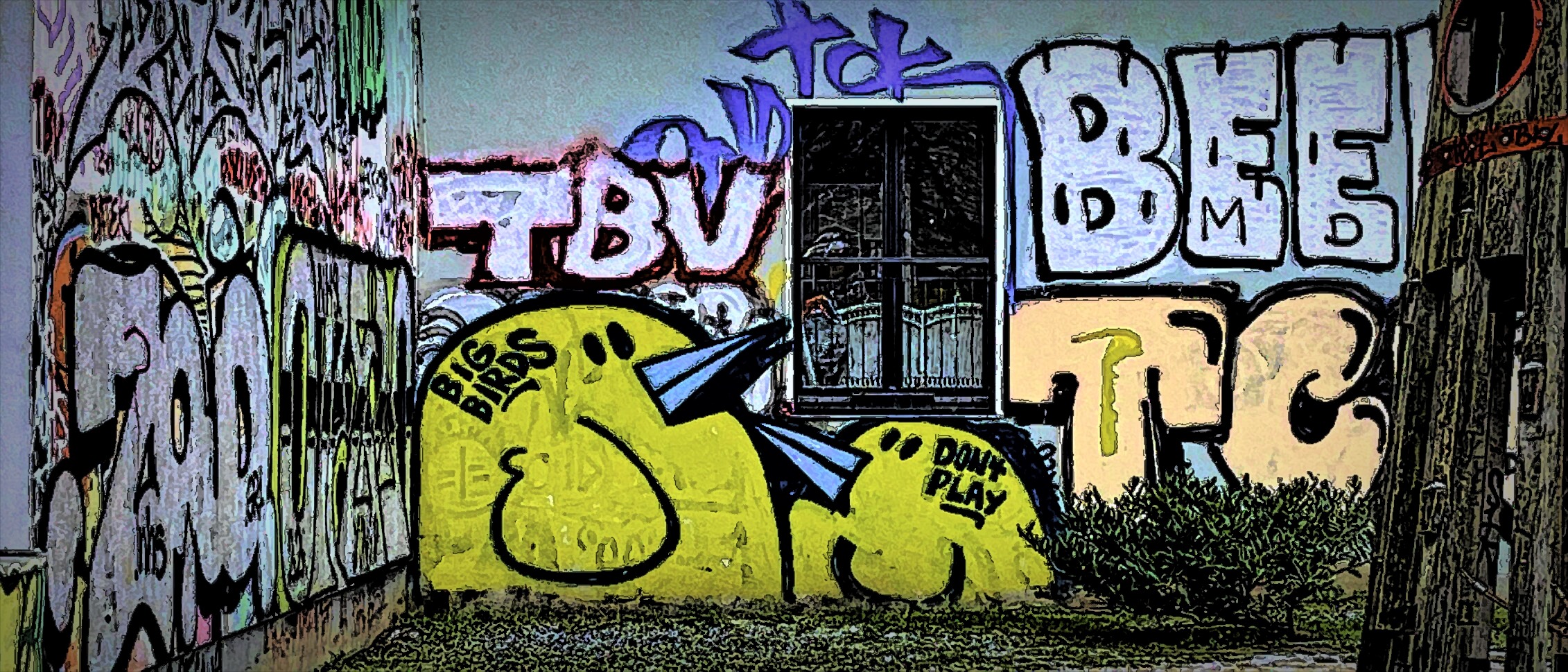
Even something as subtle as The Birds Crew added to that feeling. Their work appears throughout Berlin in small, repeated bird figures. Easy to miss at first. Then suddenly, everywhere.
It’s not loud or trying to dominate space. It’s repetition and presence. A quiet visual language that becomes part of how you read the city once you start noticing it.


By the end of the trip, what stood out wasn’t that anything had changed, but that something had been confirmed.
I wasn’t just drawn to the art itself. I was drawn to what sits behind it. The people, the context, the stories that become visible once you spend a little more time with it. That curiosity didn’t stay in Berlin. It followed me home. I still find myself reading about artists I came across there, trying to understand how their work came to exist in the first place.
I’m not someone who lives on social media, but I do share murals when something stops me. Usually paired with a song that fits the moment. It’s less about documenting and more about marking something before it disappears.
Even now, months later, I still think about that trip. Not as something that changed how I see everything, but as something that reinforced how I already move through the world.
This isn’t about transformation. It’s about attention.
It’s about noticing small things and recognizing when someone has taken those same details and turned them into something you can stand in front of.
Sometimes the most lasting things aren’t the ones that change you. They’re the ones that help you see what was already there a little more clearly.
Credit: All photos taken by Jacob Fuentes
Discover more from Battered Suitcase
Subscribe to get the latest posts sent to your email.