Wroclaw, Poland is probably not on many people’s travel list. It certainly wasn’t on mine. When we decided to go to Germany to check out the Christmas markets, we knew we wanted to visit another country as well. When I was in elementary school, I had a pen pal from Poland. This was during the time Russia controlled Poland. Her name was Marta Bartys. That experience stirred my interest in Poland. Since Dresden was near Poland, I convinced Silvette Poland would be a good place to visit. Krakow seemed a good choice and Wroclaw was about half way between. That’s how we ended up in Wroclaw.

We were not staying in the city center so we needed to use the public transportation system. We figured out the nearby tram with some help, and soon we were off to the Old Town area. Being seniors riding the tram was free.
At the center of Old Town is a large plaza which is the location of the Christmas market. We didn’t really focus on the market at this point as we like to see the markets at night when they are all lit up and colorful.
What we did focus on was the architecture. We found the buildings surrounding the plaza quite interesting. First of all they were painted in nice colors which were brighter than the gray day we found ourselves in. The large doors we saw around also fascinated us. Some of them definitely were showing age.


We saw a very large steeple past one corner just off of the plaza. We went over to check it out. The church was closed when we got there, but it appeared to open in the afternoon. As we looked around, we saw an interesting statue nearby. On closer inspection it turned out to be a monument to Diedrich Bonhoffer. It seems Wroclaw is Bonhoffer’s home town. In Bonhoffer’s time the city’s name was Breslau. and it was then part of Germany. The memorial is simple but certainly an important one to honor this brave man who stood against the tyranny of his day.


It was about this time we discovered one of the fun aspects of Wroclaw. Throughout the city are small statues of gnomes. They can be next to a building, on a building or just about anywhere. They may relate to a building nearby or they may refer to a special event. The first gnome (or dwarf) showed up in 2005. They reference a Communist resistance group in the 1980s named the Orange Alternative. They used gnomes as a symbol of their organization. Gnomes are continually being added, and today it’s estimated there are over 800 gnomes around the city. During the course of our wanderings, we came across a number of them. It’s a unique way to engage children as they can be on the look out for them. These photos are of some of the ones we found.


We walked back and around the plaza noting some of the Christmas market decorations along the way. We then headed off to a different part of town.


I really didn’t know where we were going, but then we spotted another large church and headed in that direction. The Church of St. Dorothea is on a major street through town. It has a very fortress look to it. It was hard to take a complete picture of it as it was so close to the street. This church was fairly untouched by the ravages of World War II. Unfortunately we were unable to go inside to see the church.
We continued on down the street and soon we came to another church, the Corpus Christi Church. This is another Catholic church. We did not attempt to go in. There was space nearby to get a decent picture of this church.


During our walk in this part of town, we came across an unusual art installation. Statues of life-sized people seemed to disappear under a street and then reappear on the other side. Installed in 2005 it represents a period of time under Communist imposed martial law. During this time the police would arrest people who often “disappeared.” The piece is called Passage or The Monument of the Anonymous Pedestrians.


The Corpus Christi Church is near a promenade which parallels a waterway. I needed to use the restroom, and there was one in this walking area. I went in the men’s side and encountered a woman ready to collect about 50 cents for me to use the restroom. All I had with me was a 10 Euro bill. She took it and then began to count out coins for change for me. She even pulled out her purse to look for some more coins. I didn’t even know what she gave me, but it was a large handful of Euro coins. At least I got to use the restroom.
In this promenade was a map of the area, and it showed some different walking routes. One of the routes was called the four denominations. The map listed over 20 churches. On the list were some Orthodox churches. I had never been inside an Orthodox church building so the idea of visiting one intrigud me..
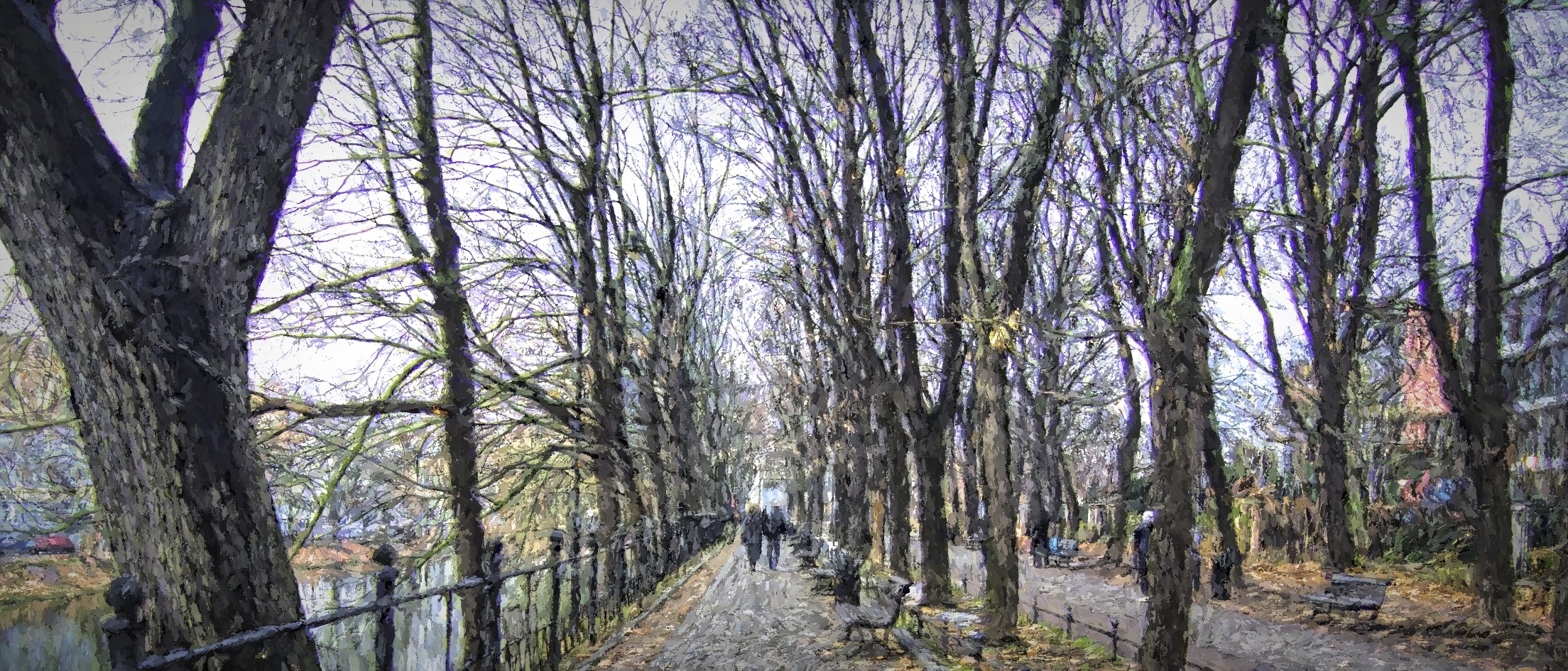
We continued following the walking trail along the river. Eventually we came across an information board. We learned that some royalty who would come to this area created the promenade. An old building on a corner was marked as the place where the royal family would stay.


We finally came to the Cathedral of the Nativity of the Most Holy Mother of God. Unfortunately it was not open to go inside. The front looked like they were doing some repair work. There were some icons on the front of the building that were interesting, but we did not find an open entrance.


At this point we decided to head back to the Old Town plaza and try to visit the St. Elizabeth Church. This time the door was open, and we could go in. For some strange reason a high pitched sound shrilled the whole time we were there. it was like a testing of the alarm system. it was very annoying, but we still took the time to look around.
One of the unique features of the church was its windows. The church has some unusual stained glass windows. The art used was more contemporary and seemed to focus on messages of social concern rather than just show the Bible characters like most European stained glass windows do. There was also a bust of Pope John Paul in the sanctuary as he was of Polish origin. A beautiful pipe organ was in the back of the church. It had just recently been restored after the old one had been destroyed in a fire.


After visiting the church we returned to our hotel to rest. Silvette was fighting a cold so we didn’t want to push too far. We returned in the evening to focus on the Christmas market. Even in the evening the market didn’t feel overly crowded so it was comfortable to walk around. This market had an even greater carnival atmosphere to it. There were a number of rides and even an area for carnival type games.
There were some nice decorations hanging above the market. A lot of booths were selling items rather than just food. The only thing is it seemed the same company would have a few of the same booths around so parts of it felt repetitious. There were still food booths around. Some of the foods were familiar from other markets such as the sausages and the funnel cakes. However there were some different options here. One item which seemed quite popular was a large slice of bread with some vegetables and meat on top of it. I never saw anyone making one, but I saw people walking around eating one.


We ended up eating at a Mexican restaurant. We have had Mexican food in each of the three cities we have visited so far. The food here was not quite so traditional, but it was good.
After our tour of the market we headed for our hotel. One thing I discovered I could do is follow along on Google maps while we were on the tram. That way I knew when we were about to reach our stop even though I couldn’t see it in the dark.
And so we had our first day in Wroclaw. Tomorrow will be another opportunity to see new sights in this interesting Polish city.
Discover more from Battered Suitcase
Subscribe to get the latest posts sent to your email.