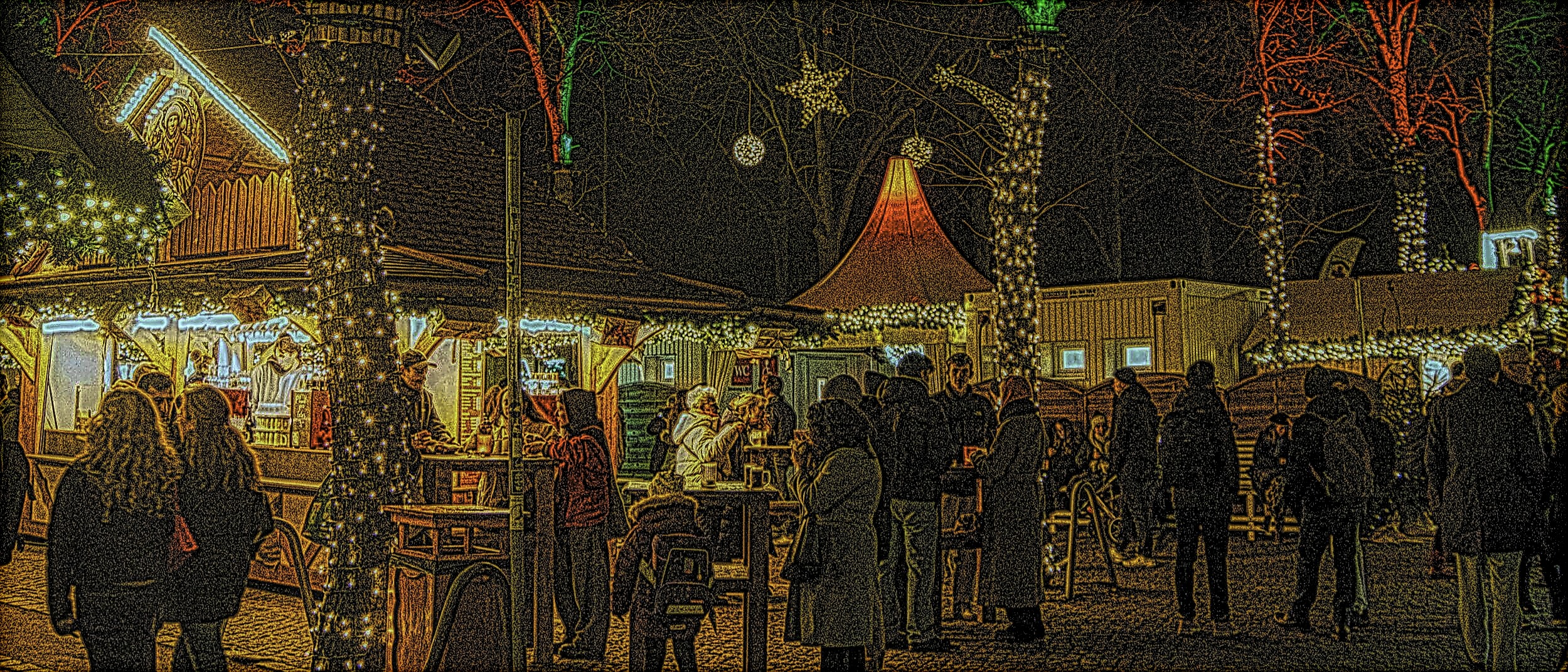
Our final full day in Berlin arrived, and we were feeling a little tired. We decided to take it easy rather than walk the eight miles we had walked on the previous two days. We took the morning to look a little more into Berlin’s history and the infamous wall. In the evening we would visit our final Christmas Market in Berlin.
When the government tore down the Berlin wall, there was some debate about what to do with it. Some promoted the idea that the wall should remain, at least part of it, as an important historical element. Others wanted it removed completely as they felt it was ugly and a reminder of a time in history they did not want to remember. In the end most of the wall was destroyed. On Monday we had visited the Eastside Gallery where artists had painted art pieces on the longest remaining portion of the wall.
The influence of the wall and its history is far more complicated than I had realized. We learned about this by visiting the Berlin Wall Memorial. The Memorial was a 20 minute walk from our hotel. We left in late morning to visit it. The walk was easy, but despite the weather forecast, we did encounter some light rain showers along the way.
We arrived at the monument, and it was a fairly large grassy area. At both ends of the grassy area stood some information poles grouped together. The information is provided through a variety of media including pictures or videos along with written information in both German and English. It was quite informative about the wall. One of the things I learned here was that East Germany had not built the wall immediately after the war. It was a later development as more and more Eastern Germans tried to find a way out of the country. It was easy to slip into West Berlin and leave from there. Finally in the early 60s the government decided to build a wall to stop people from leaving.
The memorial had some exposed areas in the ground that showed some of the structural elements of the wall and its surroundings. I didn’t find that too enlightening. On the other hand a large wall stands in the middle with pictures of many of those who died as a result of the wall. Some were trying to escape and died in the process. Others who were not even trying to escape were also killed. There were over 100 people who died as a result of the Berlin wall.


Another unfortunate consequence of the wall was how it divided things. A church cemetery stood near the construction of the wall. Because of its proximity to the wall the government moved some graves to a different location. Other remains may not have been moved, and a simple wooden cross marks that uncertain location.

The cemetery is quite large. We walked through it, and we discovered some of the larger more interesting monuments. The families of many of the dead lived in West Berlin, and they were now cut off from being able to visit their loved one’s graves because of the Berlin Wall.


A short distance away stood a church. When East Germany built the wall, it came quite close to the front of the church. The challenge for the church was that 80% of its parishioners lived in West Berlin while the pastor and a few others lived in East Berlin. The church struggled, and finally the government destroyed the church. After the government finally removed the wall, they gave the land back to the church. Today a unique round chapel stands in the place where the original church building stood. They refer to it as Reconciliation Chapel.


Across the street from the grassy field is an information center for the wall. I wouldn’t call it a museum as it doesn’t have artifacts. Its purpose is to tell the story of the wall and its impact upon people. It does a good job of doing that.

On the first floor we found information boards with pictures that tell the story of the wall. On the second level they share stories of how the wall had impacted the lives of specific people. They also tell the story of how the wall came to an end. There is a lot of information here and to read all the boards would take several hours. I kind of skimmed over some of it as it becomes overwhelming to see the challenges and difficulties that arose in the lives of people because of the wall.
Above the information areas is an observation deck. The purpose is to allow people to see down into an area that retains a section of the wall. In truth it was not just one wall. There are actually two walls with the first one on the East German side not as difficult to get over but still meant to be a deterrent. The communists designed the wall facing West Berlin to have a rounded top. This made it more difficult for people to pull themselves up. Between the walls was a pretty wide space with observation towers at intervals to watch this space in between. Other barriers such as barbed wire might also be between the two walls to make getting across the space more difficult.


This Memorial focuses just on the wall, yet there is a lot to learn about here, and it is worth spending some time to read about this extreme time in the world’s history. One of the things I admire here is that the Germans are acknowledging what happened in their history. They are not proud of it, but are willing to tell the story so that others will realize what can happen.
After stretching our minds, we walked back to our hotel and rested. In late afternoon Andrea and Jacob joined us to go visit one more Christmas Market. Someone had recommended this market to them. However, we needed to take a train out to it. The ride out went pretty quickly although we did have to change trains.
This market is in front of the Charlottenburg Palace which had been the home of Queen Sophia. What was most unique about this market was the palace itself. Throughout the evening they projected lights onto the front of the palace. It was a constantly changing scene. The women liked when they shone gingerbread men onto the front. Snow and snow covered trees were another creation. They also would just change the color fo the palace. I told Silvette I didn’t even know what the real color of the palace was.
One can tour inside the palace, but we were not there in the daytime to do that which was unfortunate. There is an admission fee to tour the palace.


This market was laid out nicely and had a good mix of food booths and items to sell. We had a bratwurst for dinner. Not the most healthy meal, but it was cheap. That’s one of the good things about the Christmas Markets; they offer food at a reasonable price so eating there is cheaper than eating at a restaurant.
One of the things I observed was that some of the booths were the same at each market. It seemed to me that some companies were selling their products at the Christmas markets and hiring people to sell for them. This kind of changes the equation some. I feel most Americans think the items sold are from the artisans who make them. While I think there are definitely some of those; It doesn’t seem true for all of the booths.


Having finished our tour of the market, we headed back to the train and our hotel. Tomorrow we head for Dresden. The Christmas market there is supposed to be the oldest one in Germany.
What are your thoughts on Christmas markets? Do you think they are good places to shop or are they more of a feel good Christmas experience? Let me know your thoughts in the comment box below.
Discover more from Battered Suitcase
Subscribe to get the latest posts sent to your email.